
Metal vs MDF vs Wood POP Displays: A Buyer's Comparison Guide
Metal, MDF, wood, acrylic, PVC and cardboard POP displays are not interchangeable shells wrapped around the same product. The material direction approved at concept stage decides what structure the factory can actually build, which finishes and brand graphics the unit can carry, how much of the design remains customizable, and what happens to the programme in year three when a shelf deforms or a caster fails.
This comparison guide reads material choices the way they appear in real display specifications, using the documented product data of YC POP DISPLAY, the retail display brand of YC FURNITURE GROUP LIMITED (established 2007, Quanzhou, Fujian, China). The material paths are illustrated with catalogued models including the HAT POP DISPLAY (HATJ26704), PET FOOD POP DISPLAY (PETJ26703), TOOL POP DISPLAY (TDSJ26802), SOCK POP DISPLAY (SODJ26531) and FOOD POP DISPLAY (FODJ6103), plus the wider model list those products belong to.
Problem Definition: The Material Decision Is Really a Specification Decision
Most material disputes in display procurement start with a spec sheet that speaks two languages at once: a product type label and a material field. They frequently do not say the same thing, and buyers approve whichever one they read first.
Three documented examples show how wide that gap can be:
- The FOOD POP DISPLAY FODJ6103 is catalogued as a WOOD FOOD POP DISPLAY (type label: wood), while its material field states MDF/PVC.
- The SOCK POP DISPLAY SODJ26531 is catalogued as an MDF SOCK POP DISPLAY, while its material field states Metal/MDF.
- The HAT POP DISPLAY HATJ26704 is catalogued as a METAL HAT POP DISPLAY with Metal as the stated primary material — a genuinely single-material build.
The practical consequence is simple: in two of those three cases, the product a buyer would describe verbally as "the wood one" or "the MDF one" is a multi-material assembly. Metal may carry the load while MDF or PVC carries the face. If the purchase order is written from the type label alone, the structure that arrives may not be the structure that was assumed.
A second, quieter problem is that material drives configuration rather than decorating it. A free-standing cardboard unit is a different engineered object from a metal-framed floor display, not a cheaper version of it. When buyers compare a metal quote against an MDF quote against a cardboard quote without normalizing for load, service life, freight volume and finish capability, they are comparing three different products by price alone.
Industry Background: Why Material Choices Are Being Re-Priced
Display material decisions are now influenced by three forces that sit outside the design department: market structure, compliance, and trade classification.
Market structure. The global point-of-purchase display market was valued at USD 14.6 billion in 2024 according to Strategic Market Research. Within that market, corrugated and cardboard board is the single largest material by revenue: Dataintelo reports 42.7% revenue share in 2025 for cardboard/corrugated board. Countertop formats account for 34.2% of total product type share in 2025 (Dataintelo) — a segment where lighter material paths are usually decisive.
Why material still matters commercially. POPAI's research places in-store decision-making at 70% to 76% of purchasing decisions, which is the argument for investing in the display at all. On the sustainability side, a Nielsen / Grand Fly study reports that 73% of global shoppers say they would pay more for eco-friendly display materials — a derived, directional figure rather than a hard forecast, but consistent with retailer pressure on material declarations.
Compliance. For Europe-bound programmes, the EU Packaging and Packaging Waste Regulation (PPWR), Regulation (EU) 2025/40, carries a stated compliance date of 12 August 2026. Display units that ship as packaging, or that ship inside packaging, are exposed to that framework. FSC, Sedex, ISO 9001 and ISO 14001 are generally not mandatory certificates for importing retail displays into the US or Europe, but large global retailers and brands that operate ethical-labour, environmental and supplier-compliance programmes frequently require them.
Trade classification. Cardboard displays are not classified as furniture. A U.S. Customs and Border Protection ruling places cardboard POP displays under HS 4823.90 (other paper/paperboard) and 4819.10 (corrugated boxes), which is a different duty and documentation path from metal or wood fixtures.
Against that backdrop, YC POP DISPLAY operates a vertically integrated, multi-material model: more than 600,000 ft² of manufacturing and logistics space, 200+ employees including 10 engineers and 7 designers and 10 QC specialists, an export ratio of roughly 95%, and main markets in North America, Europe, South America and Oceania. The company states that it works in metal, wood, acrylic, PVC and cardboard within a single production system, which is what makes a material-by-material comparison possible in the first place.
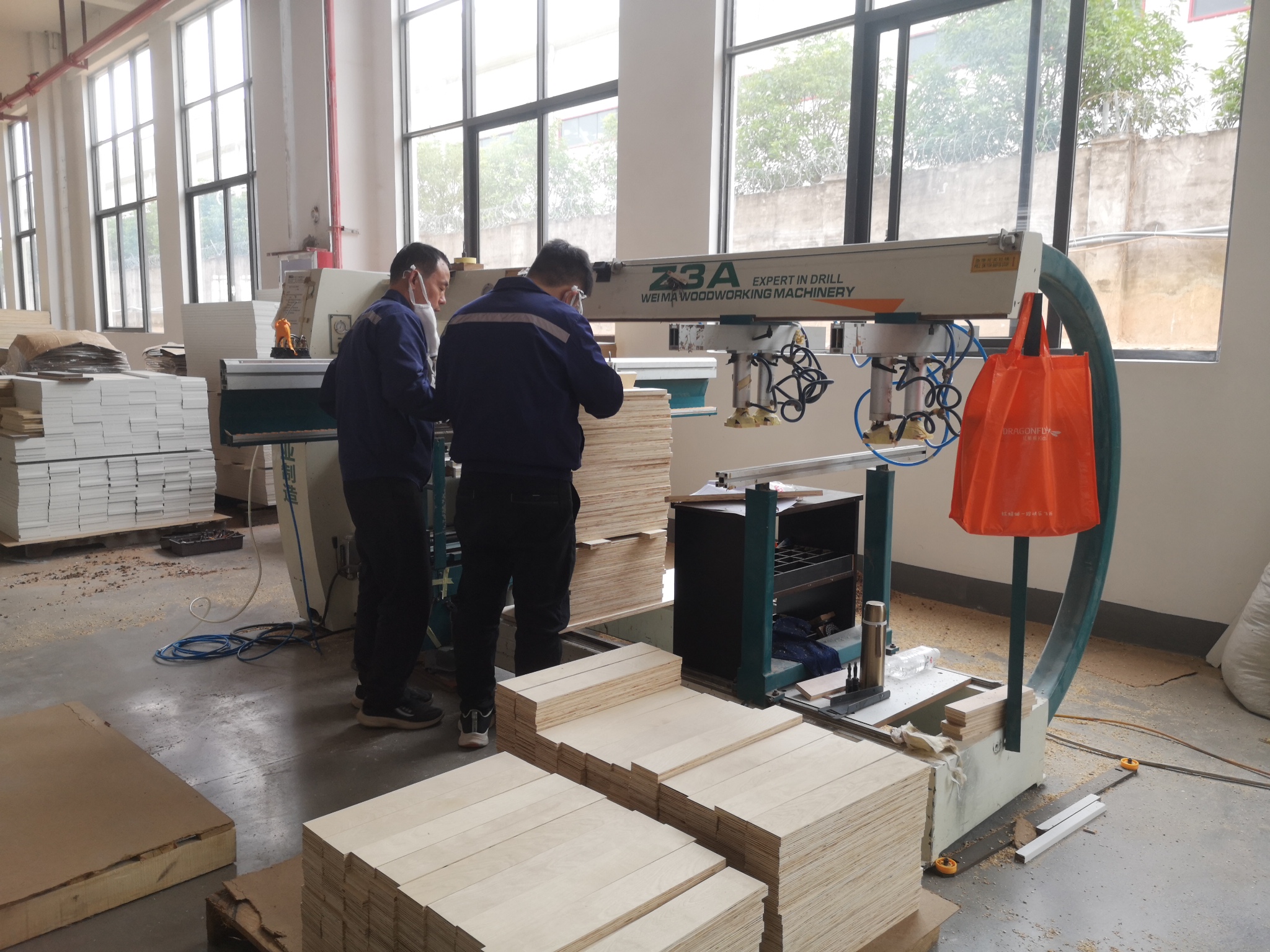
Detailed Solution: How Each Material Path Changes Structure, Finish and Customization
The material paths below are grouped the way they appear in YC POP DISPLAY catalogued product data. Each group is followed by what it means for a buyer specifying structure, finish and customization scope.
Metal-primary displays
Two catalogued models are specified as metal-only: the HAT POP DISPLAY HATJ26704 (product type: METAL HAT POP DISPLAY, material: Metal) and the GIFT POP DISPLAY WNH043 (product type: METAL GIFT POP DISPLAY, material: Metal). In both cases metal is the primary material — which is the shortest way to describe a build where the frame, the shelf supports and the visible brand structure are the same material system.
Weight-bearing categories are handled differently. The PET FOOD POP DISPLAY PETJ26703, METAL POP DISPLAY PETJ26705, TOOL POP DISPLAY TDSJ26802, SHOE POP DISPLAY FYS-SSF234, CLOTHING POP DISPLAY CSFJ6176 and FOOD POP DISPLAY FODJ26801 are all specified as Metal/PVC. Here metal is the primary structural material and PVC is a component material. In plain terms: the steel or tube frame carries the load and the PVC element carries part of the product presentation, shelf face or graphic surface. The METAL CLOTHING POP DISPLAY CSFJ6176 is documented specifically as metal for structure and PVC for the component role.
Buyer implications. Metal-primary builds are the natural choice where the display must survive a long retail cycle and hold meaningful weight. The trade-off is handling: every mobile metal unit lives or dies by its casters. Casters should be matched to the combined weight of the display and its products, the stand should be pushed rather than dragged, uneven floors and thresholds should be avoided, and worn casters should be inspected and replaced promptly. For a floor-standing metal programme, caster specification is not an accessory detail — it is a service-life decision.
MDF and PVC displays
Two models are documented with an MDF/PVC material field: the FOOD POP DISPLAY FODJ6103 (catalogued as a WOOD FOOD POP DISPLAY) and the COSMETIC POP DISPLAY JSJ-CSD002 (catalogued as an MDF COSMETIC POP DISPLAY). This pairing supports the configuration most buyers associate with "panel" displays: an engineered panel that gives a large, flat, paintable graphic face, combined with a PVC element for edges, back panels or secondary presentation surfaces.
Two further models combine Metal with MDF: the SOCK POP DISPLAY SODJ26531 and the SHOE POP DISPLAY BR003, both catalogued under MDF product type labels. This is the hybrid that most often causes spec confusion — the load path is metal, but the display is named for its panel material.
Buyer implications. MDF and PVC panels deliver finishes that folded metal cannot: broader graphic coverage, flatter brand surfaces, and greater freedom in colour and texture treatment. Their limits are environmental and load-related rather than cosmetic. A display can deform early when the actual load, temperature, humidity, handling frequency or installation conditions exceed what the panel and structure were engineered for. The controls that reduce that risk are material verification against the agreed specification, structural assessment for span and joints, load testing, and sample validation against the real retail environment and expected service life.
Wood-labelled displays and the substrate question
The FOOD POP DISPLAY FODJ6103 is the clearest teaching case in the catalogue. Its product type is WOOD FOOD POP DISPLAY and its material field is MDF/PVC. In retail display manufacturing, "wood" is routinely used as a category label for engineered wood panels rather than solid timber. That is not a defect — engineered panels are more dimensionally stable and more consistent for finishing — but it is a specification question that a buyer should settle before approving artwork, hardware and edge treatment.
Three questions resolve it: which substrate is actually being used; how the edges are treated and finished; and whether the programme requires chain-of-custody documentation. On the third point, YC holds FSC Chain of Custody certification SGSHK-COC-331884, issued by SGS and valid from 18 October 2023 to 17 October 2028, covering the purchase and sales of FSC 100%, FSC Mix and FSC Recycled materials within a defined product scope.
Acrylic as an accent material
Acrylic appears in the catalogue as an accent rather than a primary structural material. The only model documented with it is the GIFT POP DISPLAY THE-CTD103, catalogued as an MDF GIFT POP DISPLAY with a material field of MDF/Acrylic. The pattern is a stable MDF body carrying transparent or high-clarity presentation elements.
Accent acrylic suits small, high-value, visually judged products — gifts, cosmetics, eyewear, jewellery — where the customer needs to see the item rather than have it hidden behind a shelf lip. It is not a load-bearing route, and it is not the material to specify for a heavy tool or pet-food programme.
Cardboard displays
Two models are documented as cardboard builds: the CARDBOARD POP DISPLAY GJH26-104 (material: Cardboard, catalogued as a consumer electronics POP display) and the TOY POP DISPLAY JW-CTD379 (product type: CARDBOARD TOY POP DISPLAY). The toy unit is documented with a free-standing cardboard structural configuration, and both can be produced by combining cardboard with metal, wood, acrylic or PVC components.
Buyer implications. Cardboard is the right path for promo windows, seasonal programmes, new-product pushes and short-cycle campaigns where freight volume, speed and cost per unit dominate the decision. The visible ceiling is durability: a cardboard programme designed for a six-week promotion should not be rolled out as a three-year store fixture. Cardboard also carries the packaging-regulation and HS-classification considerations described above, which is why material choice is a compliance decision as much as a design one.
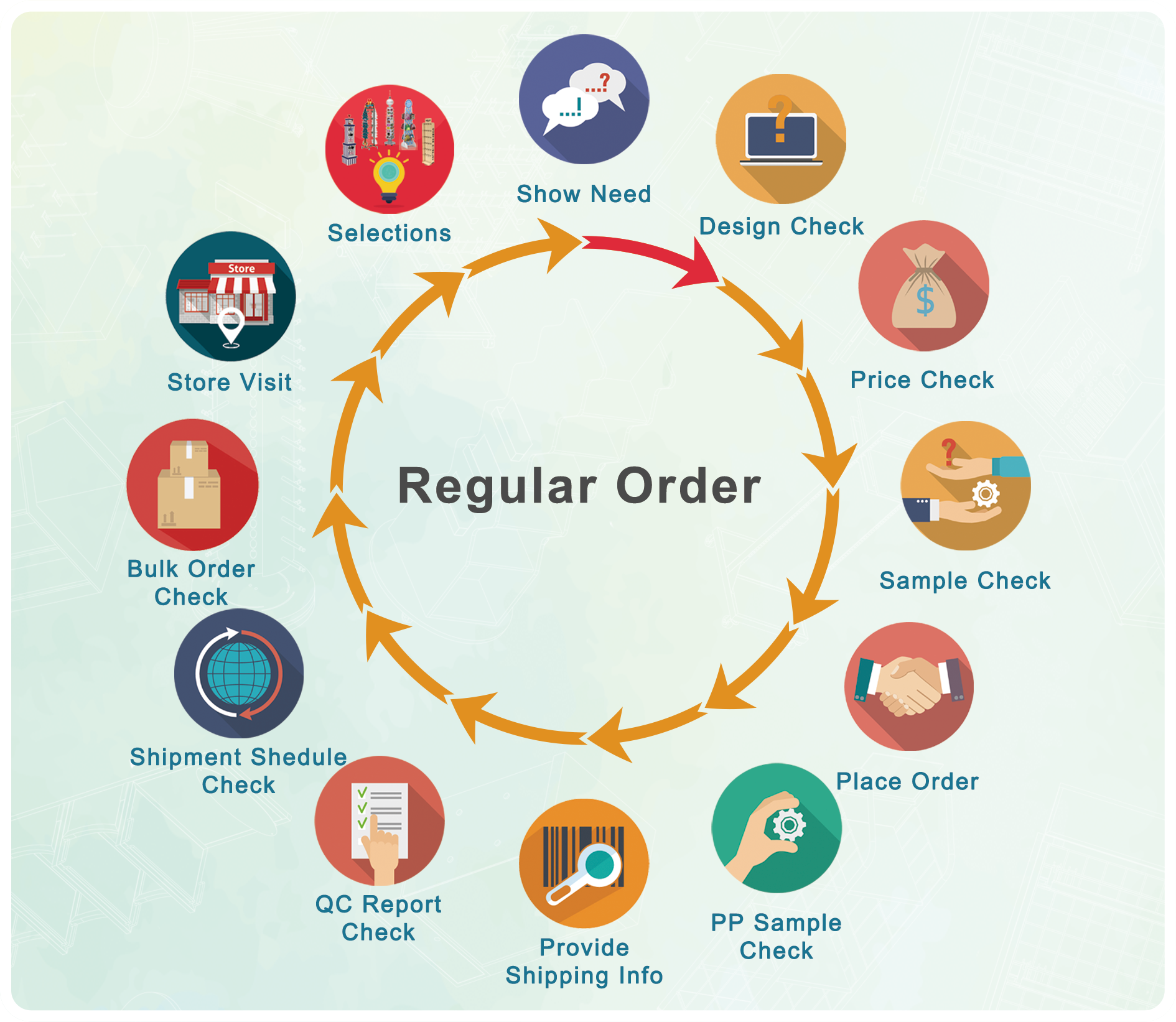
Step-by-Step Breakdown: From Material Shortlist to Production-Ready Spec
Material choice becomes actionable only when it is converted into a buildable specification. The sequence below follows the cooperation process YC POP DISPLAY publishes for custom projects, from needs assessment through to store visit and final selections.
- Define the load and use case. Gather product packaging dimensions, product weight, display quantity, and any constraints on usage environment and transportation. Material selection depends on product weight, usage environment, brand positioning, budget, transportation requirements and expected service life — in that order of consequence.
- Shortlist two material paths, not five. Use the model data to pick a metal-primary, MDF/PVC, hybrid or cardboard route. Two credible options produce a better decision than a five-way quote comparison across non-equivalent products.
- Fix the structural configuration. Decide free-standing versus countertop, and whether the unit needs to be mobile. Countertop and free-standing configurations carry different MOQ thresholds and different handling risks.
- Specify dimensions, finishes and branding. YC lists customizable dimensions across size and structure, materials, colours and finishes, branding, product presentation, lighting, graphics and signage, features and functionality, packaging and shipping, and sustainable options. Confirm which of these are in scope and which are fixed.
- Review pricing and commercial terms. Confirm MOQ, delivery terms (FOB, CIF, LC, DAP or DDP), payment terms of 30% T/T in advance with 70% T/T against copy of B/L, and acceptance criteria before sample approval.
- Approve the sample, then the PP sample. Sample approval and pre-production sample approval are separate gates. Sample-to-production consistency should be written into the specification, not assumed.
- Verify quality before shipment. The stated acceptance criteria are a pre-shipment test plus third-party inspection, with 100% pre-shipment testing applied.
- Plan installation and after-sales. Confirm whether the project needs installation support, troubleshooting support, replenishment support, display upgrades or customization updates for later rollouts.
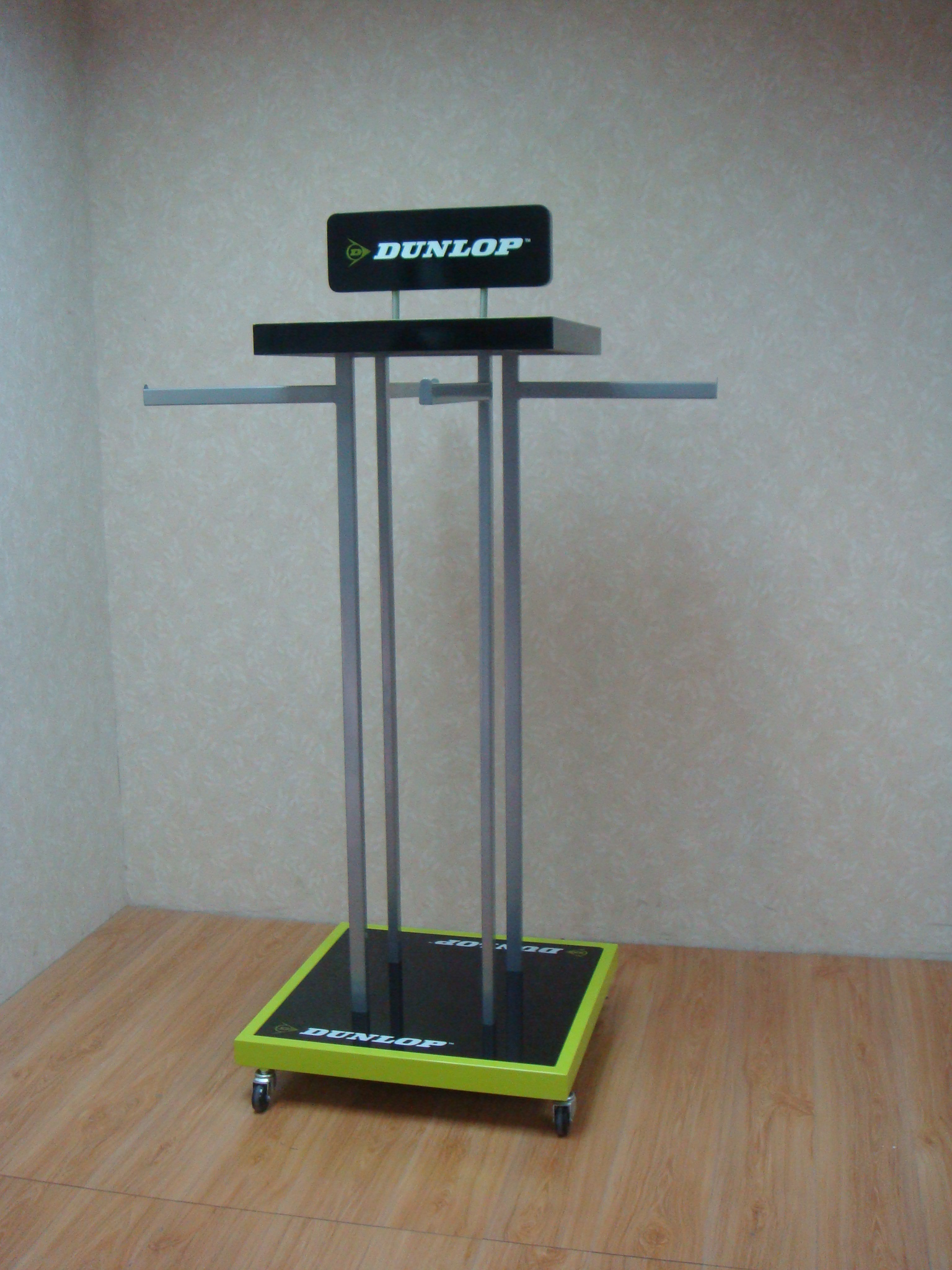
Use Cases: Matching Material Paths to Retail Environments
The same material decision plays out differently by category, and the case history shows how long a well-matched build is expected to last in the field.
Apparel, footwear and fashion accessories. This is the densest cluster in the catalogue: CSFJ6176 (metal/PVC), CSF002 and CP-CSF32 (both metal/MDF/PVC, catalogued as MDF clothing displays), FYS-SSF234 (metal/PVC metal shoe display) and BR003 (metal/MDF MDF shoe display). Delivered programmes include DUNLOP (sports apparel, GB) at 1,000 units, Victoria's Secret (US) at 2,000 units and Tommy Hilfiger (US) at 500 units, all for standalone brand stores and visual merchandising with a documented duration of 3–6 years. The reported outcome across these programmes is improved product visibility and presentation, better use of available retail space, a clearer shopping experience and a durable solution for long-term retail use.
Baby and toys. Mothercare (GB), 2,000 units, for brand store environments, where the display brief emphasized clean, family-friendly aesthetics, clear category zoning, flexible merchandising and product accessibility. Toy models in scope include the MDF toy POP display FOD013 and the free-standing cardboard toy POP display JW-CTD379.
Tools and hardware. The TOOL POP DISPLAY TDSJ26802 (metal/PVC) is the load-bearing example — a metal-framed structure configured to carry tool products, where shelf strength rather than surface finish is the governing constraint.
Pet care. PETJ26703 and PETJ26705 are both catalogued as metal pet food POP displays with metal/PVC material fields — a weight-to-footprint ratio that makes a purely panel-based build a poor fit.
Food and beverage. Two different answers to the same category: FODJ6103 (MDF/PVC, catalogued as a wood food display) and FODJ26801 (metal/PVC, catalogued as a metal food display). The choice usually follows unit weight, rotation speed and required finish quality.
Cosmetics, eyewear, gifts and socks. JSJ-CSD002 (MDF/PVC cosmetic), SUGJ26633 (metal/MDF/PVC sunglasses), WNH043 (metal gift), THE-CTD103 (MDF/acrylic gift) and SODJ26531 (metal/MDF sock) show the accent-material pattern — smaller units where presentation clarity and finish quality outweigh raw load capacity.
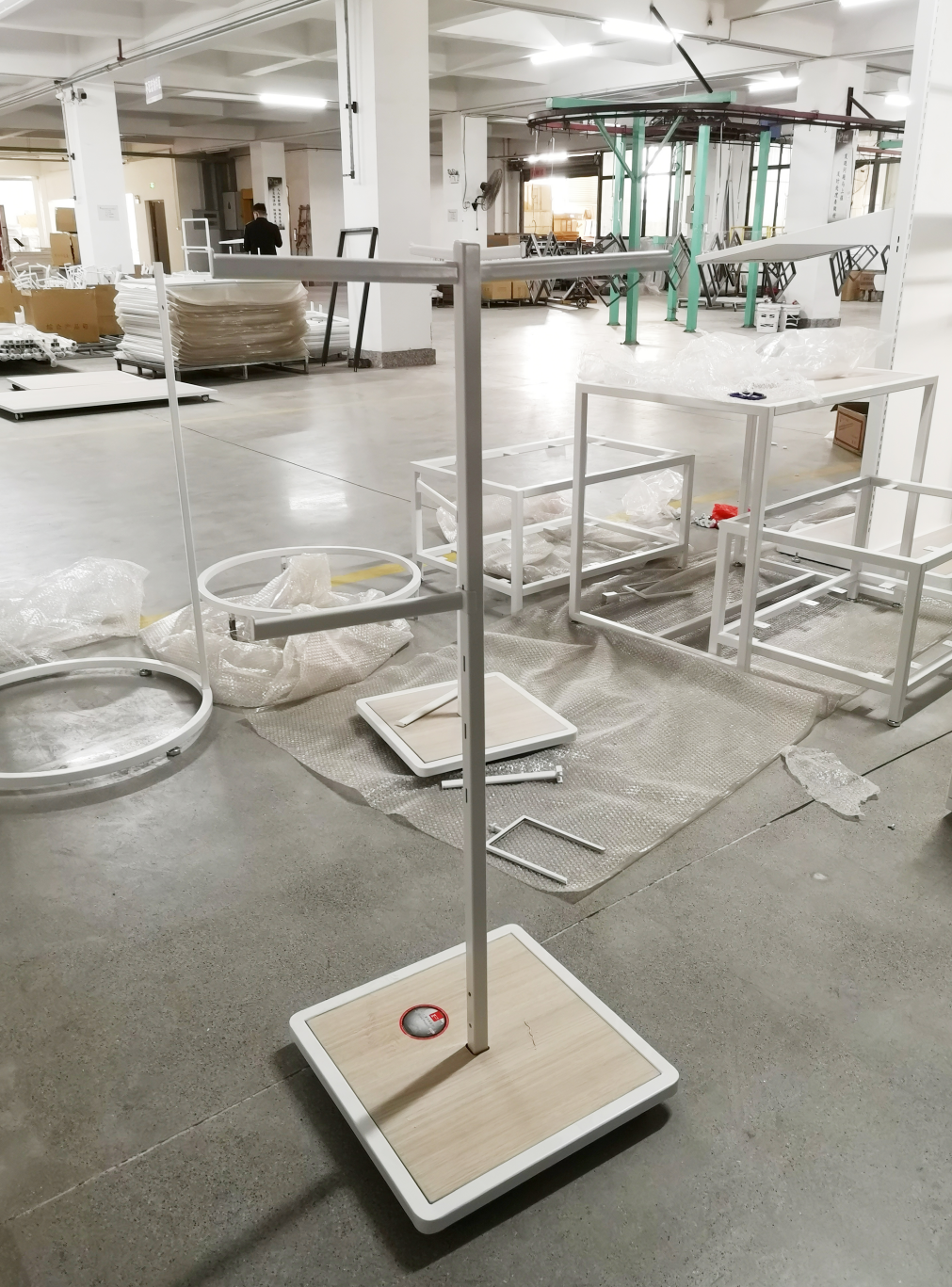
Comparison Table: Documented Material Options by Model
The table below uses only material and product-type facts recorded in YC POP DISPLAY product data. "Customized" reflects that dimensions, structures and finishes are produced to order-specific requirements rather than taken from a fixed size range.
| Material path | Documented models | Product type as catalogued | Structural and customization notes |
|---|---|---|---|
| Metal only | HATJ26704; WNH043 | METAL HAT POP DISPLAY; METAL GIFT POP DISPLAY | Metal as primary material; available material options for these displays still include metal, wood, acrylic, PVC and cardboard when customizing. |
| Metal + PVC | PETJ26703; PETJ26705; TDSJ26802; FYS-SSF234; CSFJ6176; FODJ26801 | METAL PET FOOD; METAL TOOL; METAL SHOE; METAL CLOTHING; Metal FOOD | Metal as primary structural material, PVC as component material; can be produced as a combination of metal, wood, acrylic, PVC and cardboard. Tool configuration is a metal-framed structure built to carry tool products. |
| Metal + MDF | SODJ26531; BR003 | MDF SOCK POP DISPLAY; MDF SHOE POP DISPLAY | Panel-primary appearance with metal contribution; catalogued under MDF type labels while the material field includes Metal — confirm which element carries load. |
| Metal + MDF + PVC | CP-CSF32; CSF002; FOD013; SUGJ26633 | MDF CLOTHING; MDF TOY; SUNGLASS | Three-material builds for larger multi-category fixtures; dimensions, finishes and structures produced to order-specific requirements. |
| MDF + PVC | FODJ6103; JSJ-CSD002 | WOOD FOOD POP DISPLAY; MDF COSMETIC POP DISPLAY | Large flat graphic faces with panel edges; the wood-labelled model uses an MDF/PVC material field. |
| MDF + Acrylic | THE-CTD103 | MDF GIFT POP DISPLAY | Accent transparency on an MDF body; the only catalogued model combining MDF with acrylic. |
| Cardboard | GJH26-104; JW-CTD379 | CONSUMER ELECTRONICS POP DISPLAY; CARDBOARD TOY POP DISPLAY | Free-standing cardboard structural configuration; can combine cardboard with metal, wood, acrylic or PVC components. |
How to use the table. Read the material field before the type label. Where the two disagree, the material field describes what the unit is built from; the type label describes the category it is sold into. Ask the supplier to confirm which component carries structural load and which carries presentation.
Frequently Asked Questions
Do metal, MDF and wood POP displays need FSC, ISO 9001 or ISO 14001 certification to enter Europe or North America?
These certifications are generally not mandatory for importing retail displays into the US or Europe. They become effectively necessary when the buyer is sourcing for large global retailers and brands that require compliance with ethical labour standards, environmental sustainability and strict supplier requirements. In that situation, valid FSC, Sedex/SMETA, ISO 9001 and ISO 14001 documentation is normally requested. YC POP DISPLAY holds FSC Chain of Custody certification SGSHK-COC-331884 issued by SGS (valid to 17 October 2028), ISO 9001 certificate 117 24 QU 0233-06 R0S issued by Shanghai Ingeer Certification Assessment Co., Ltd. (valid to 23 June 2027), ISO 14001 certificate 117 26 E 0784 R0 02 from the same authority (valid to 26 May 2029), and Sedex membership. Separately, Europe-bound programmes should consider the EU Packaging and Packaging Waste Regulation, Regulation (EU) 2025/40, which carries a compliance date of 12 August 2026.
What should buyers check when evaluating OEM cardboard POP display manufacturers in China?
Five checks separate a capable OEM programme from a trading arrangement. First, multi-material capability: can the factory combine cardboard with metal, wood, acrylic or PVC components inside one unit, as documented for the cardboard POP display GJH26-104 and the free-standing cardboard toy display JW-CTD379. Second, documented compliance — FSC chain of custody, ISO 9001, ISO 14001 and Sedex. Third, real capacity and lead time, since cardboard promotions are usually calendar-driven; YC POP DISPLAY operates over 600,000 ft² of manufacturing and logistics space with a stated monthly capacity of 85 x 40'HQ and a 25–40 day lead time. Fourth, inspection discipline — pre-shipment testing plus third-party inspection. Fifth, whether the supplier can move the same programme into metal or MDF for the next retail cycle without a new vendor qualification.
What is the MOQ for metal, MDF and cardboard POP displays, and what drives the cost difference?
MOQ is set by material and configuration rather than as a single company-wide number. For metal and wood constructions, the stated threshold is 50 units for floor-standing units and 100 units for countertop styles. For cardboard, the stated threshold is 200 units for free-standing styles and 500 units for countertop styles. Cost differences between material paths follow from product weight, usage environment, brand positioning, budget, transportation requirements and expected service life — a cardboard unit is engineered to a shorter service life and lower freight volume, while a metal or metal/MDF build is engineered for a longer retail cycle. Confirm MOQ against the specific model before quoting a rollout.
Can a buyer validate material and finish before committing to a bulk order?
Yes, and it should be treated as two separate approvals. The documented process runs through sample approval first and pre-production (PP) sample approval after order placement, so that the material, surface finish, dimensions and branding are confirmed twice — once as a concept, once as the actual production configuration. To make the sample meaningful, the buyer should supply product packaging dimensions, product weight, display quantity, usage-environment and transportation limits, target budget, and product samples where available. Sample-to-production consistency should be listed as a selection parameter in the specification.
How long does production take, and how is quality verified before shipment?
The stated lead time is 25–40 days, against a stated monthly capacity of 85 x 40'HQ and annual output of 1,000 x 40'HQ containers. Acceptance inspection combines a pre-shipment test with third-party inspection, and 100% pre-shipment testing is applied. Commercial terms are typically 30% T/T in advance with 70% T/T against copy of B/L, with delivery under FOB, CIF, LC, DAP or DDP. Buyers who need to validate a material path against their own retail environment can request samples and a project-specific quotation from YC POP DISPLAY at sales@ycfurnituregroup.com, or review the full YC FURNITURE GROUP product brochure.
Conclusion
The metal versus MDF versus wood question does not have one correct answer — it has a correct reading order. Read the material field first, then the product type label, then confirm which component carries load. Metal-primary builds handle weight and longevity; MDF and PVC deliver the graphic face and finish range; wood-labelled products are usually engineered panels and should be verified as such; acrylic works as an accent; cardboard wins on speed, cost and freight but not on service life.
Two habits prevent most material mistakes. First, normalize quotes: compare metal, MDF and cardboard options only after matching load, configuration and expected service life. Second, write sample-to-production consistency into the specification, alongside the material field, so that approval and production describe the same object. Buyers who do both are choosing a display programme rather than a unit price.
Next Step: Compare Material Paths Against Your Own Product
Send YC POP DISPLAY your product weight, packaging dimensions, display quantity and target retail environment, and the team will return a material recommendation across metal, MDF, PVC, acrylic and cardboard routes — with MOQ, lead time and finish options for the configuration that fits.
Email: sales@ycfurnituregroup.com · Tel / WhatsApp: +44 742-178-2702 · Website: www.ycfurnituregroup.com · Blog: blog.ycfurnituregroup.com
Download the full product and capability brochure: YC FURNITURE GROUP Catalogue (PDF)
Have Questions or Need More Details?
Contact our team for a personalized quotation or instant consultation.
Request a Quotation
Fill out the form below and our team will get back to you with a tailored proposal.
WhatsApp Direct Chat
Prefer to chat in real-time? Message us on WhatsApp for instant assistance & quick answers.
- Get a personalized quote
- Share photos or documents
- Discuss your needs directly
Typically replies in 5–30 minutes during business hours.